Belfast Transport Hub
- Location: Belfast
- Client: Translink
- Project Completion: 2025
Project Information
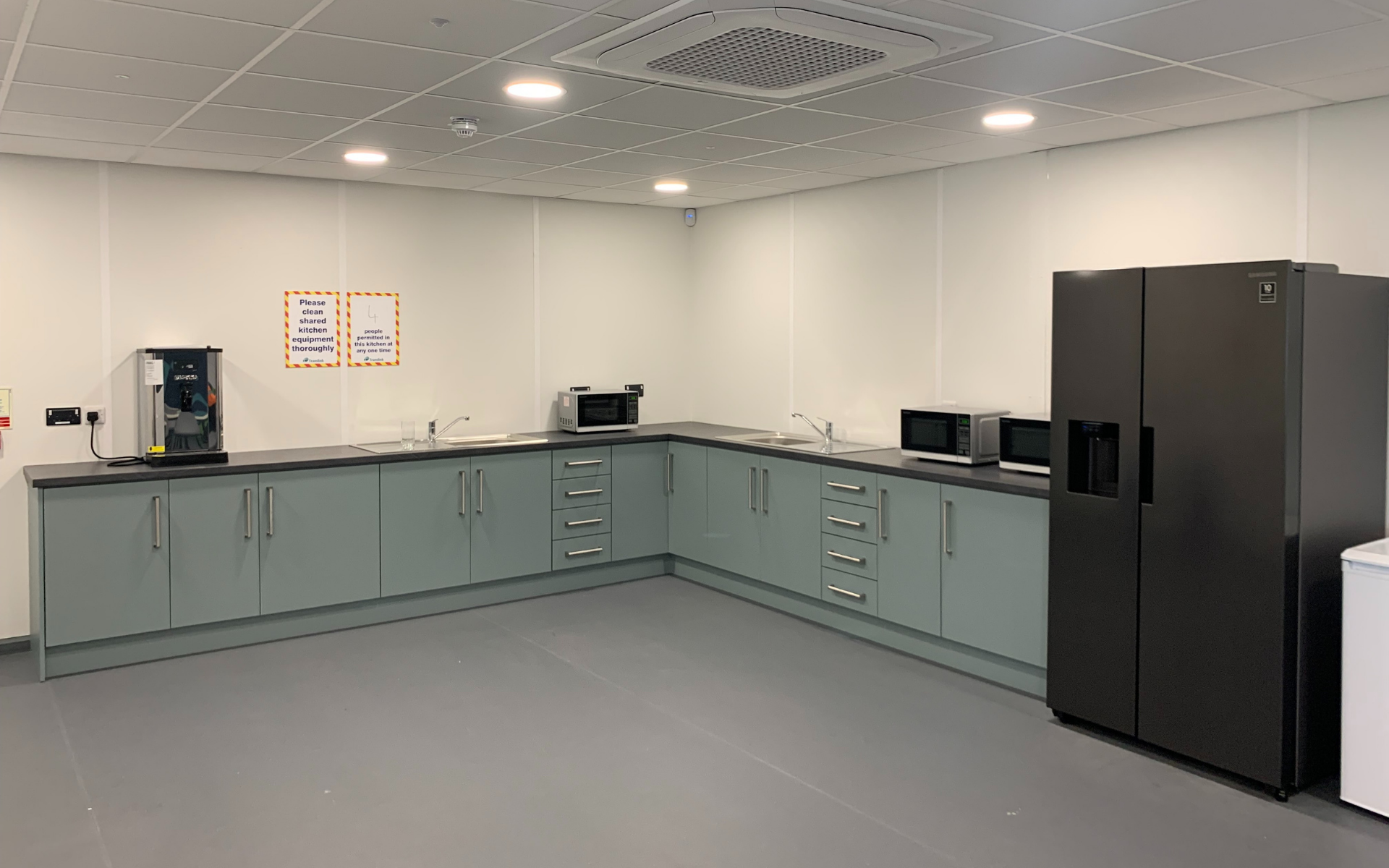
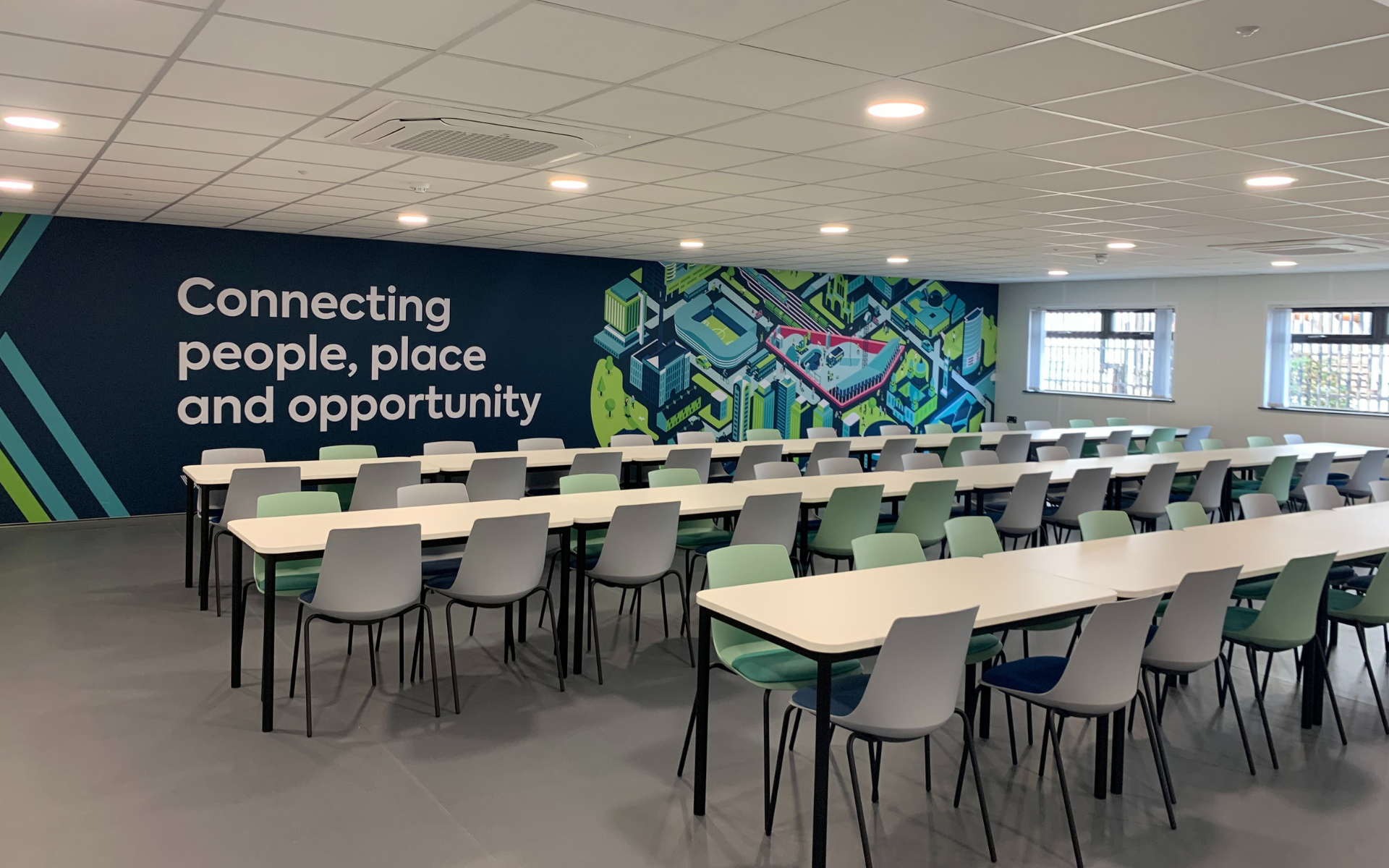
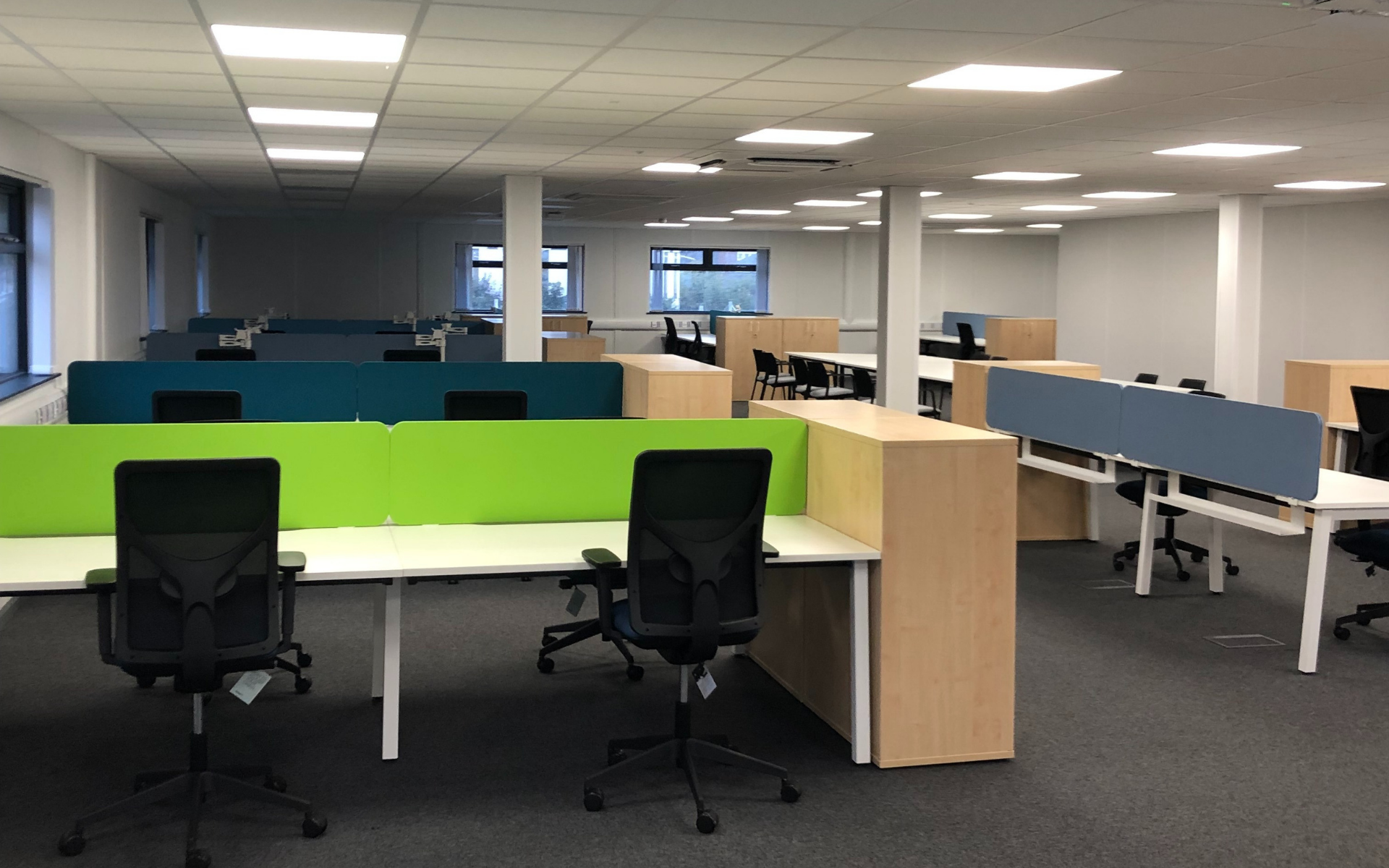
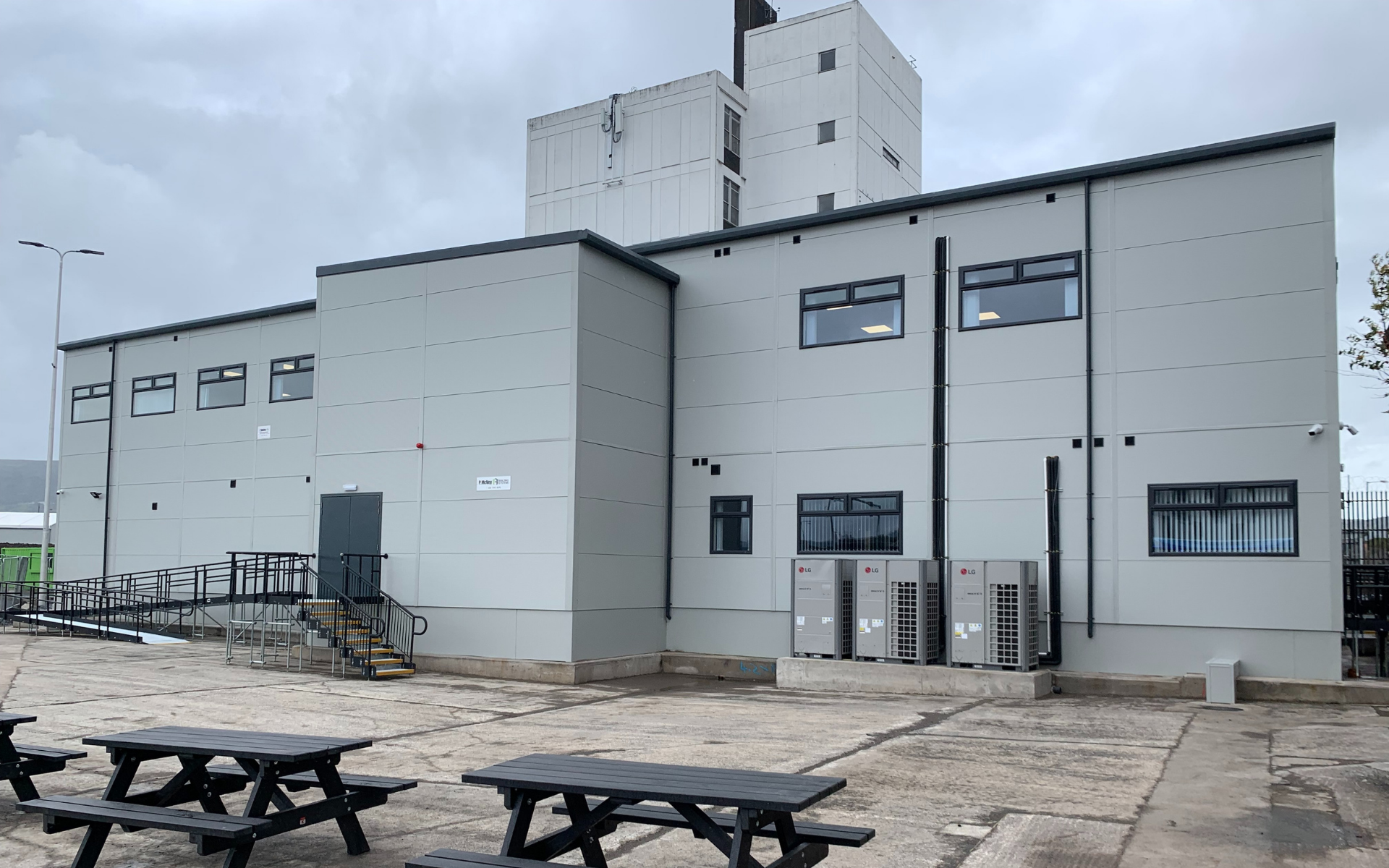
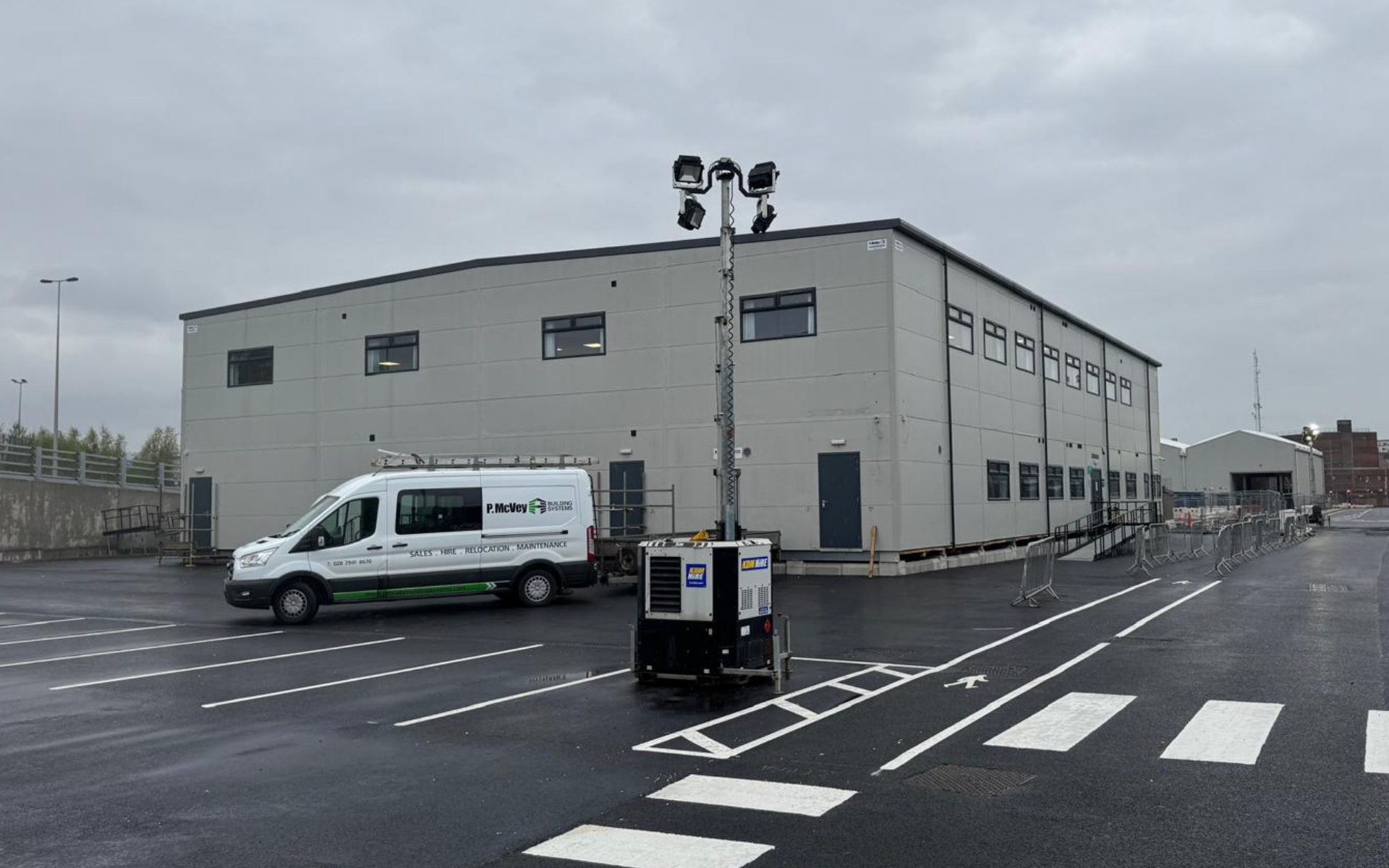
P McVey Building Systems delivered a bespoke modular site office for Translink’s Belfast Transport Hub. The office accommodated up to 200 employees as part of the return-to-office initiative. The team designed a two-storey, 1,600m² modular building in-house. The building included office spaces, induction rooms, boardrooms, huddle areas, lockers, washrooms, drying rooms, and a canteen with servery. This setup provided a fully operational workplace while the Weavers Cross development progressed.
After successfully delivering the original modular office, the team relocated it within the station grounds. The relocation included a five-week strip-out, one-week installation, and six-week fit-out. The team carefully dismantled, transported, and reassembled 56 modular units. This created open-plan office space and welfare facilities for Translink staff. Working in a live, operational transport hub presented several challenges. The team navigated restricted access due to ongoing train and bus services. They also managed demolition activities near the Boyne Bridge. Despite these challenges, the team coordinated with hub operations. They delivered both the original build and the relocation on schedule and within budget. As a result, staff received safe and functional workspaces.
Offsite Solution
The project fully leveraged offsite modular construction. The team manufactured 46 bespoke steel-frame modules in a controlled factory. They installed internal mechanical, electrical, and plumbing systems on-site after placing the modules. Phase 1 of the build involved installing 22 ground-floor modules in under eight hours. Phase 2 included 24 first-floor modules and the roof, completing the two-storey structure. On-site installation took only three working days. This approach reduced disruption and allowed the building to become fully operational quickly.
For the relocation, the team dismantled all 56 modular units and moved them to the new location. By using an offsite-led approach, the team repurposed the building efficiently. They avoided demolition and rebuild, minimised waste, reduced groundworks, and lowered the carbon footprint. The project achieved a 35% reduction in embodied carbon compared to traditional construction.
This project demonstrates the speed, flexibility, and efficiency of modular buildings. By manufacturing and assembling modules offsite, P McVey Building Systems delivered high-quality finishes with minimal on-site disruption. The team maintained a safe working environment in a live operational hub. This project also shows how modular buildings adapt to changing operational needs, providing cost-effective, sustainable, and fully functional solutions for complex infrastructure projects.